
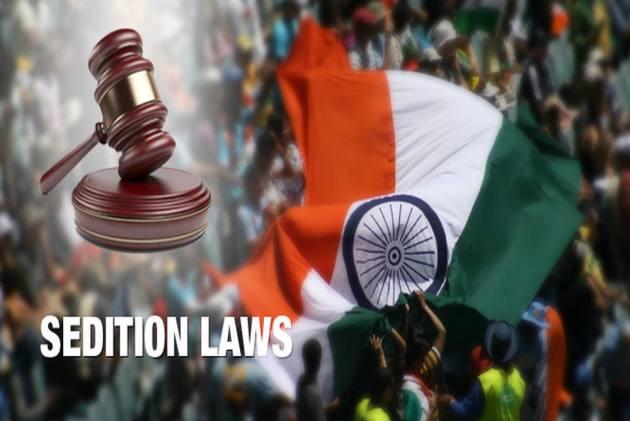
IN NEWS
The Government has sought more time to submit its written response to petitions challenging the constitutional validity of Section 124A of the Indian Penal Code dealing with the offense of sedition.
In the year 2021, the CJI (Chief Justice of India) had questioned why a colonial law used against Mahatma Gandhi and Bal Gangadhar Tilak continued to survive in the law book after 75 years of Independence.
The Chief Justice had said sedition or Section 124A of the Indian Penal Code was prone to misuse by the government.
WHAT IS SEDITION LAW?
Section 124A IPC:
It defines sedition as an offence committed when "any person by words, either spoken or written, or by signs, or by visible representation, or otherwise, brings or attempts to bring into hatred or contempt, or excites or attempts to excite disaffection towards the government established by law in India".
Punishment for the Offence of Sedition:
It is a non-bailable offence. Punishment under Section 124A ranges from imprisonment up to three years to a life term, to which a fine may be added.
SIGNIFICANCE:
Reasonable Restrictions:
The constitution of India prescribes reasonable restrictions (under Article 19(2)) that can always be imposed on this right (Freedom of Speech and Expression) in order to ensure its responsible exercise and to ensure that it is equally available to all citizens.
Maintaining Unity & Integrity:
Sedition law helps the government in combating anti-national, secessionist and terrorist elements.
Maintaining Stability of State:
It helps in protecting the elected government from attempts to overthrow the government with violence and illegal means. The continued existence of the government established by law is an essential condition of the stability of the State.
ISSUES:
Relic of Colonial Era:
Colonial administrators used sedition to lock up people who criticised the British policies.
Stalwarts of the freedom movement such as Lokmanya Tilak, Mahatma Gandhi, Jawaharlal Nehru, Bhagat Singh, etc., were convicted for their “seditious” speeches, writings and activities under British rule.
Disregarding Supreme Court’s Judgement:
Supreme Court in Kedar Nath Singh vs State of Bihar case 1962, limited application of sedition to “acts involving intention or tendency to create disorder, or disturbance of law and order, or incitement to violence”.
Thus, invoking sedition charges against academicians, lawyers, socio-political activists and students is in disregard of the Supreme Court’s order.
Stand of Constituent Assembly:
The Constituent Assembly did not agree to include sedition in the Constitution. The members felt it would curtail freedom of speech and expression.
Repressing Democratic Values:
Increasingly, India is being described as an elected autocracy primarily because of the callous and calculated use of sedition law
Way Forward
The definition of sedition should be narrowed down, to include only the issues pertaining to the territorial integrity of India as well as the sovereignty of the country.
Civil society must take the lead to raise awareness about the arbitrary use of Sedition law.


